Short Summary
Knowing how to choose a builder is one of the most vital things to do before any investment in a house, but it seems that most home buyers do not give this process any importance and go by floor plan and price alone.
This could lead to problems such as delays in possession, substandard construction quality, and even legal troubles.
Having a good checklist in selecting a builder will help you distinguish credible builders from those who only market their product through brochures. Speak with LML Homes before you put your signature on any paper.
Why the Builder You Choose Matters More Than the Property Itself
A builder’s reputation, quality of construction, and the reliability of the developer determine whether your money will become a house or an albatross around your neck. When evaluating builders in Chennai, look beyond advertisements and focus on the builder’s track record, construction quality, and ability to deliver projects as promised.
Homebuyers usually get carried away by a floor plan or the cost and ignore asking one question that will save them money: whose builder is it, and are you sure he will complete this project?
Choosing a builder isn’t just a procedure; it’s a decision that can help you move into your new apartment on time, instead of chasing the builder for years about an unfinished tower. This is why researching builders in Chennai before making an investment can help buyers make a more informed decision.
And it is important because any property is worth no more than its brand. Even the most beautiful brochure is worthless if the builder has a reputation for delayed handovers, unresolved complaints, or financial troubles. Here is what experienced buyers never overlook before they invest even a rupee.
10 Expert Checks Before You Invest in a Builder
- Ensure RERA Registration
All legal projects must be registered according to the Real Estate (Regulation and Development) Act, 2016. This Act requires developers to deposit at least 70% of buyer funds received into a designated escrow account for project-specific use and caps advance payments at 10% of the home’s cost before the sale agreement is signed.
You can verify the RERA number of the project and the builder from your state’s RERA portal to see whether the delivery date promised by the builder is accurate or not. RERA registration is just an initial step; there is still more research to be done in that regard.
- Examine The Builder’s History Of Delivering Projects
A good builder has a history rather than just making promises. The last three or five projects delivered by the builder have something important to say about their reliability: did they deliver their projects near the committed deadline, or did they push their deadlines many times?
- Inspect Completed Projects, Not Only the Project That Is for Sale
Get the list of completed projects of the builder and visit those projects personally. Look around the common areas, inspect the lifts, observe the state of landscaping, and if possible, talk to some residents there.
Getting a completed project inspected is much more instructive about the building standards than seeing a showroom flat will ever be.
- Compare Site Visits and Brochures: Believe Your Eyes More Than Words
Brochures are sales tools. They have no objective whatsoever other than to get you buying. While a nice-looking picture of the clubhouse may look appealing, it means nothing if the site itself has uncovered drains, unfinished boundary walls, or construction that is many years late. Always ask for a site visit first.
- Find Out More About The Reputation Of The Builder Beyond Google Reviews
The reputation of a builder goes beyond star ratings. Talk to independent real estate agents, go through property discussion forums online and talk to the owners of older projects built by the builder to get an idea of how their experience was, from possession to after-sales.
- Take Customer Complaints Seriously, And Not Just Their Star Ratings
Every builder is going to have some complaints; it’s inevitable. It’s important to look at whether these complaints revolve around trivial issues or things like delayed possession, substandard construction and poor customer service after the sale. Search for the builder’s name followed by complaints or RERA case.
- Assess Financial Stability
Financially stable builders are much less likely to leave their project halfway. Signs of financial stability include ongoing financing from banks, having multiple ongoing and completed projects, and no previous projects left unfinished due to lack of funds. It can be hard to assess the builder’s finances, but his capacity to work on multiple projects at once without delays serves as a decent proxy.
- Focus on Quality, Not Only on Amenities
Amenities make nice photographs. Construction quality does not always translate into good images. Enquire about the structural design, construction materials, and whether the builder abides by accepted construction practices. Try, if possible, getting a civil engineer or an independent inspector to assess the project before you settle anything.
- Research Developer Credibility and Litigation History
Developer credibility refers to the developer’s reputation with the regulators and courts. A quick Google search for any ongoing litigation, RERA fines or complaints against the developer would help unearth the problems that may not come out in sales pitches.
- Find Out About the Red Flags That Are Typically Overlooked By Homebuyers
There are several red flags that buyers often ignore because of their excitement:
- Inconsistent possession date information during sales pitch sessions
- Refusal to share RERA registration information during sales pitch sessions
- Huge discounts or limited-time offer tactics
- Unwillingness to allow you to see the project site alone
- Demand for payments of big amounts prior to construction milestones
Each one of these may be explained separately. Taken together, they are definitely a pattern to take into account.
Builder Selection Checklist: Quick Reference
- RERA Verification: Registered number, aligned with delivery period
- Previous Experience in Delivering: Timely delivery in previous projects
- Completed Projects: Visited physically, feedback from residents
- On-site Visit: Brochure claims matched, timely construction
- Reputation: Uniform reputation from various sources
- Customer Complaints: Trends rather than single complaints reviewed
- Financial Strength: Multiple projects in progress and not halted
- Project Standards: Material, structure, and standards of the project are checked
- Legal Issues: No ongoing legal cases or RERA issues
- Yellow Flags: Any pressure tactics, unclear dates, etc.
Common Buyer Mistakes When Choosing a Builder
- Booking on emotions and not facts
Allowing oneself to be taken in by an extremely well-staged sample flat without considering the track record of delivery by the builder.
- Basing all decisions solely on brochures and online 3D walkthroughs
Not conducting an inspection of the project firsthand. Assuming that RERA registration is all the research needed
RERA registration guarantees the legality of the project but nothing else.
- Disregarding older projects
Typically, buyers tend to consider only the current project and ignore what the same builder delivered five years ago.
- Not seeing patterns of complaints
Ignoring multiple complaints without finding out if there is any pattern in them.
Expert Tips
Experienced property buyers take selecting a builder almost the same way as selecting a business partner, doing their own due diligence rather than basing everything on what’s printed on the flyer, talking to at least two to three residents who live in some of the builder’s previous projects, and never signing a payment plan which is too front-heavy before work even starts.
What matters most is that they exit the minute the builder fails to respond to direct enquiries on project delivery dates and funding sources.
How LML Homes is the Standard for Reliable Builders
Building projects with reliable builders shouldn’t always be a shot in the dark, and that’s the approach adopted by LML Homes.
Buying a home requires careful consideration of factors such as RERA compliance, project timelines, construction quality, location and developer credibility. Buyers looking for practical tips for buying their dream apartment or villa can use these factors to evaluate a project and make a more informed decision. LML Homes prioritises transparency, project quality and developer integrity throughout the home-buying process.
To wrap up: Make Your Choice Based on Facts, Not Feelings
In the end, the ability to select the right builder comes down to ensuring that what is claimed matches up with what is delivered.
Whether a developer has RERA compliance, project completion, stability, and the ability to deliver on its promises counts for more than just fancy brochures and convincing pitches. Those who don’t go through the trouble often find out the hard way about the price they have to pay in the form of delayed possession and disputes.
Choosing a reputed builder is an important step towards making your home-buying experience more secure and stress-free. Understanding the 7 reasons why you should buy your apartment from a reputed builder can help you make a more informed decision and choose a developer you can trust from the beginning. @LML Homes – Building Quality Homes with Trust & Reliability
Frequently Asked Questions About how to choose a builder
Q. 1. How can I verify that the builder is a reliable one?
Check the builder’s RERA registration, visit at least two completed projects in person, and ask current residents if there were any delays in possession or unresolved problems. A dependable builder will always have a history of on-time delivery.
Q. 2. What information should I check before renting an apartment from a builder?
The RERA information; confirmation of the payment schedule along with the construction schedule; verification of the project location instead of pictures in the brochures; and confirmation of any legal issues between the builder and you.
Q. 3. Is the registration of the builder with RERA sufficient for me to trust him?
No. RERA ensures the registration of the project by law and that the builder abides by certain norms of disclosure. It doesn’t ensure the quality of the building and timely delivery of the project.
Q. 4. How can I verify a builder’s previous projects?
The builder should provide the list of their projects personally, meet them physically, and talk to the current residents. Also, you can get some information and confirm dates of completion from the RERA portal.
Q. 5. What are the red flags of a bad builder?
It is better not to work with a builder if he does not specify the dates of possession, hesitates to show you RERA details, requires a large amount of payments before the start of the project, and has a lot of negative feedback.
Q. 6. How long will it take me to verify a builder before booking him?
To complete the verification process, including meeting the builder, getting RERA information, and discussing the matter with some current residents, takes about one-two weeks when planning carefully your actions and not just booking fast.
Q. 7. Do I need to contact an independent lawyer and civil engineer before booking?
Yes, if possible. The independent lawyer will help you to examine the agreement and title deeds, while the civil engineer will verify the quality of construction personally.
Q. 8. Does it make any difference if the builder is financially stable?
Yes. Builders with financing challenges are much more likely to halt construction work and hence impact the date when you will get possession of the property. The number of simultaneous projects run by the builder without delay serves as an indicator of the builder’s financial position.
Q. 9. Are big and popular builders always better than small builders?
Not always. It does make sense to verify the reputation of the builders, but being large itself is no guarantee. Larger builders may have delayed their project deliveries as well, and therefore the same parameters of verification must be followed irrespective of the size of the builder.
Q. 10. What are the documents that need to be provided by the builder before booking?
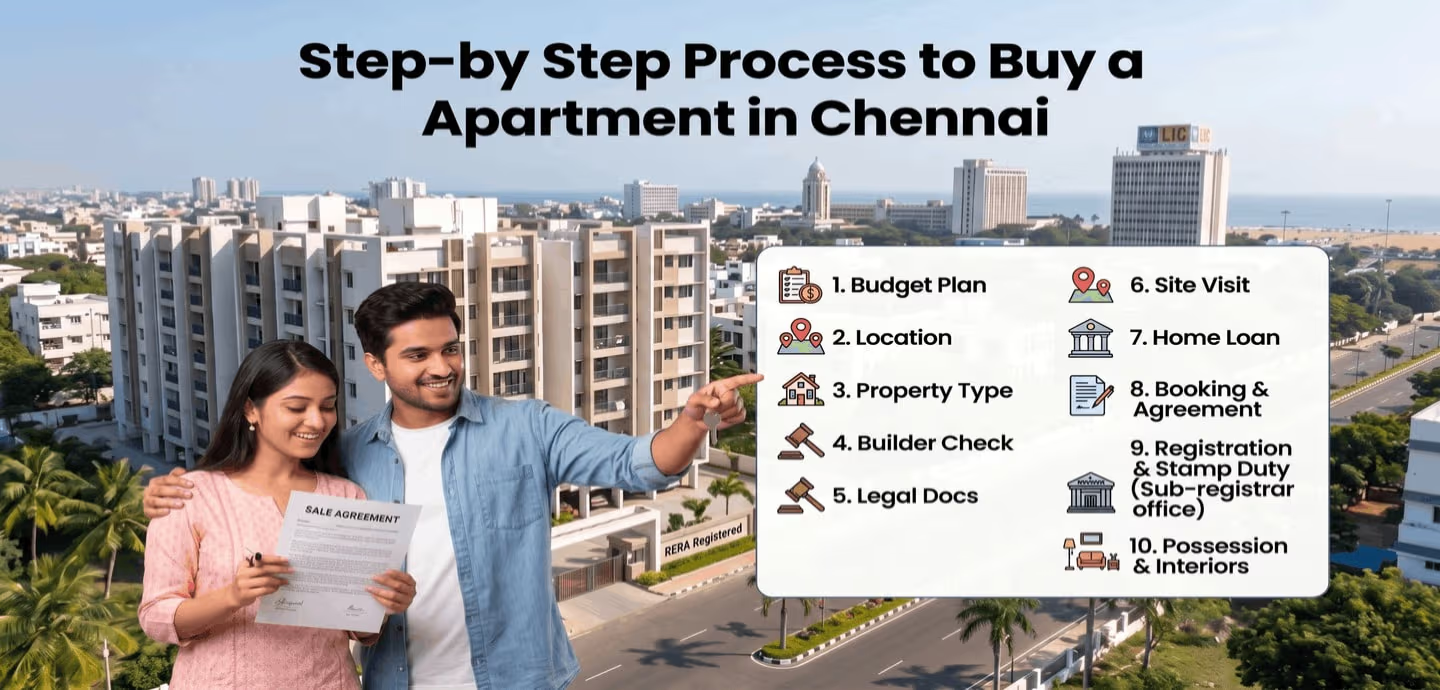
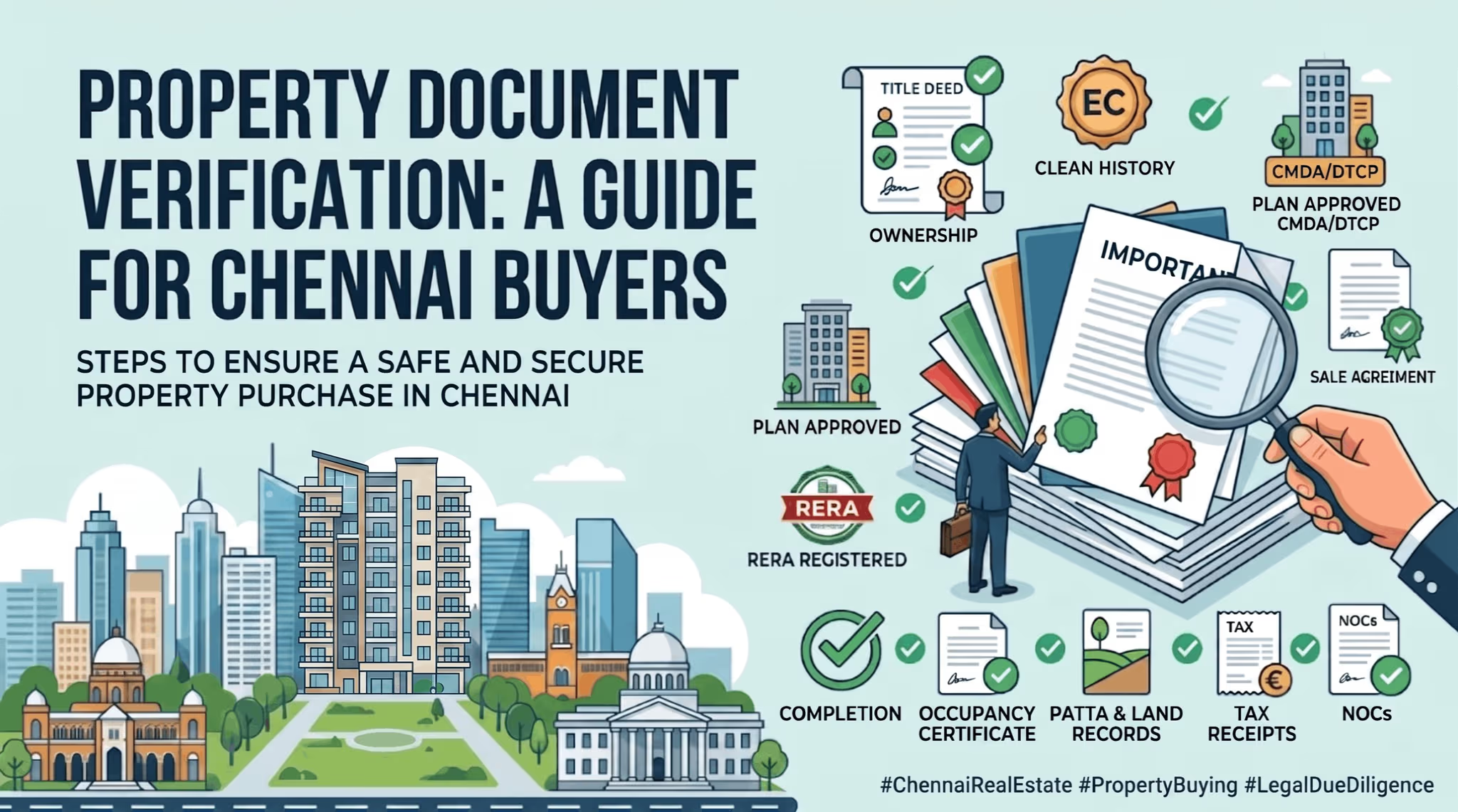
This would include the registration certificate of the project according to RERA, approved plans for the buildings, title/ownership document and milestone schedule.